

Using Multi-tiered Systems of Support to Address Students’ Mental Health: An Evidence-Based Approach
This REL Northeast & Islands webinar provides an overview of MTSS, a three-tiered framework of classroom-based and schoolwide interventions that many districts and schools use to meet the academic and/or social-emotional needs of students.

The well-established connection between positive school climate and student success means that educators need to know how the climate at their school is faring. This information is particularly important now, after the prolonged disruptions in schooling from the COVID-19 pandemic. Getting and using feedback from students themselves about their school experiences is key to understanding school climate. But how do school and district leaders know which measures to use?
In this Knowledge Alliance (KA) blog post, KA’s summer intern, Julianna Collado, met with Michelle Woodbridge and Nancy Perez from SRI International to discuss their work identifying and implementing better mental health support for educators. Please read the full blog post on the Knowledge Alliance’s site.

In the coming weeks, TLPI will share a series of blog posts highlighting key take-aways that we have heard from discussions with trauma-sensitive school leaders as they reflect on how utilizing the trauma lens guides them in their response to the ongoing challenges.
(APBS 2022) This presentation will describe the implementation of a primary prevention SEL program (Second Step) and a trauma‐informed intervention (Bounce Back) implemented in urban elementary schools. Outcomes from an RCT will be discussed.

Do you want to contribute to the evidence base on approaches for supporting school-based mental health services and supports for positive learning environments in PreK-16?

The National Center for School Mental Health (NCSMH) at the University of Maryland School of Medicine (UMSOM) compiled the following list of websites and free resources to help support transgender youth and adults.
This school mental health webinar series focuses on advancing high quality, sustainable school mental health from a multi-tiered system of support, trauma sensitive, and culturally responsive and equitable lens.
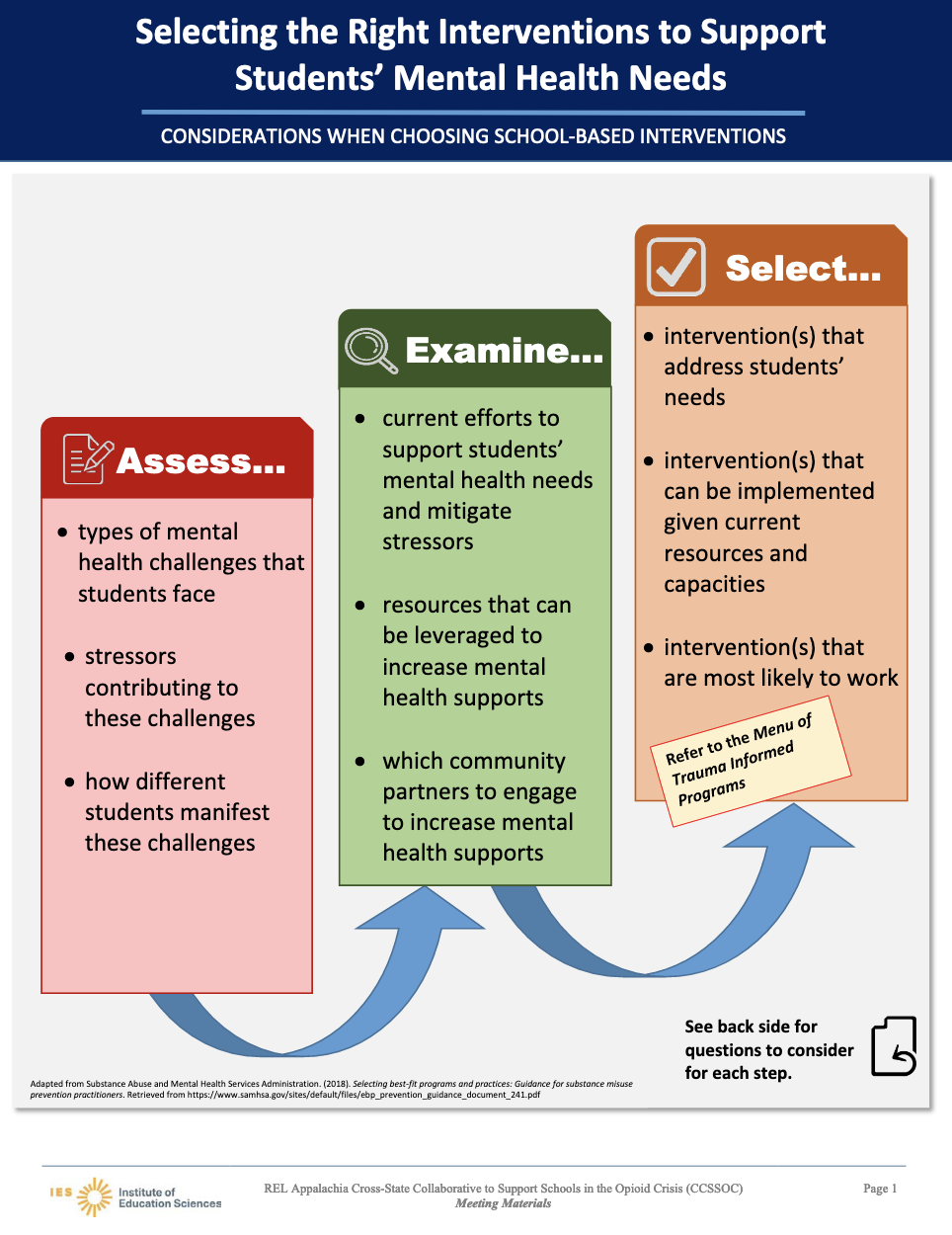
This handout covers questions to consider when choosing school-based interventions Assess current needs Examine current efforts and resources Select interventions that fit your needs & context https://ies.ed.gov/ncee/edlabs/regions/appalachia/events/materials/04-8-20-Handout1_selecting-right-interventions-to-support-students-mental-health-needs.pdf
Many educators are seeking guidance to support students who have experienced trauma, particularly related to the opioid crisis. This resource was co-developed by the REL AP team and the Cross-State Collaborative to Support Schools in the Opioid Crisis (CCSSOC) and provides a list of interventions developed to address this specific need.