Educator professional development and support involves education opportunities for teachers to improve or enhance their teaching methods or classroom environment.
First things first: How teacher change lays the foundation for student success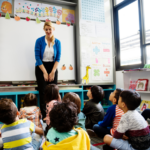
“Does this actually work?” This is the question school leaders ask when considering new intervention options. School leaders are tasked with choosing what is best for their students and their educators, often under pressure to show quick and measurable results.
Continue reading →Showing Up with Care: Using a Trauma-Informed Approach to Support Students Through Challenging Times
When the world around us feels unsettled, demonstrating compassion and intentionality in our interactions matters more than ever.
Continue reading →Supporting Students and Educators Through Disruption and Uncertainty
This article shares practical, research-informed guidance for educators and caregivers navigating sudden and often difficult disruptions.
Continue reading →Stories that teach: How reading books can support your child’s emotional growth
In this post, you’ll find ideas for how to talk about feelings while reading with your child, what to look for in a good book that supports social and emotional skills, and some children’s book recommendations.
Continue reading →Classroom Management That Works
Each new school year brings forward new faces, new lessons, and new opportunities for teachers. One of the most important factors in helping students succeed is the behind-the-scenes work that teachers do to build strong classroom management practices and a positive learning environment.
Continue reading →Why Teachers Say Yes (or No) to Research Participation—and What Researchers Can Learn From It
If you ask education researchers about their biggest challenges, chances are they’ll say something about recruitment. One of the first hurdles in education research is finding schools and teachers to participate.
Continue reading →What Should Schools Prioritize to Support Youth Mental Health?
Priority #2: Provide Training and Wellness Centers. This blog is the second of three blogs summarizing recommendations from students, families, educators, mental health professionals, and administrators for improving students’ mental health services in schools.
Continue reading →What Makes Evidence-Based Practices “Stick”? Assessing Contextual Factors in BEST in CLASS
Implementing evidence-based practices (EBPs) to support students’ positive behavior and positive learning environments requires more than the “train-and-hope strategy.” We have to do more than offer teachers training without additional support to help them implement and sustain those practices.
Continue reading →Is seeing believing? Can video coaching help support teacher practice in early childhood classrooms?
Attending a high-quality prekindergarten program has substantial benefits for young children, through long-term positive effects on academic achievement and physical and mental health.
Continue reading →Understanding trauma and supporting staff and students to thrive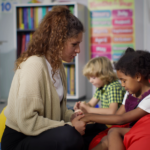
This blog post delves into these four topics and provides ready-to-use training and coaching resources to equip all school staff with the knowledge and evidence-based strategies to support students and staff who have experienced trauma.
Continue reading →BEST in CLASS: What Coaches and Teachers Say About It. Part 1: Coach Perspectives
BEST in CLASS (Behavioral, Emotional, and Social Training: Competent Learners Achieving School Success) is a tier 2 (targeted) evidence-based intervention for young children with persistent and intensive challenging behaviors.
Continue reading →Avoiding Implicit Bias in Classroom Observations
Classroom observations are a key tool in educational research and practice, used to evaluate teaching methods, assess student engagement and behavior, and gather data on classroom interactions to inform instructional strategies and policy decisions. However, observations are not immune to implicit biases—or attitudes, behaviors, and actions that are prejudiced in ...
Continue reading →Supporting Students with Behavioral and Emotional Needs: A Conversation with Carl Sumi
In the latest episode of The SRI Homeroom podcast, Senior Principal Education Researcher Carl Sumi joined host Kori Hamilton Biagas to discuss strategies, interventions, and recommendations for educators, schools, and researchers hoping to meet that need head-on.
Continue reading →BEST in CLASS: What Coaches and Teachers Say About It. Part 2: Teacher Perspectives
Practice-based coaching (PBC) promotes a strong collaborative partnership between teachers and coaches to facilitate the use of effective instructional practices. The PBC process includes skills instruction on BEST in CLASS practices, shared goals and action planning, implementation support, classroom observation, and reflection and feedback.
Continue reading →Promoting Mental Health and Well-Being in Schools: An Action Guide for School and District Leaders
Schools are prioritizing students’ mental health, and there are many tools and resources to choose from. CDC created this action guide as a place to start. It can help school and district leaders build on what they are already doing to promote students’ mental health and find new strategies to ...
Continue reading →2024 School Mental Health Quality Guides
These 2024 editions contain major updates and an and easy-to-follow format complete with action steps, best practices, examples from the field, and more.
Continue reading →Handle With Care: Expanding and evaluating trauma supports for students
Now more than ever, many children and youth are exposed to potentially traumatic events, whether it be from community or school violence, natural disasters, or the sudden loss of a loved one.
Continue reading →TeacherWise Well-Being Notebook from WISE Georgetown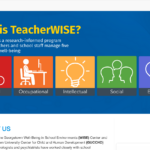
The Center for Wellbeing in School Environments (WISE) works with Washington DC school communities to reduce mental health and educational disparities.
Continue reading →Handle With Care Virtual Learning Academy
This free online course provides educators with information on implementing trauma-sensitive strategies in the school setting. Courses focus on understanding trauma, creating a trauma-informed school environment, and much more.
Continue reading →What to Say When Tragedy Strikes (Consejos para Abordar Problemas Sociales Actuales)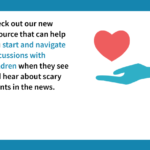
(Available in Spanish and English.) Our team at SRI Education is deeply saddened and concerned about the wars, violence, and climate destruction sweeping the world. Adults and children may be grappling with feelings of fear, worry, anxiety, anger, and confusion in response to what they are seeing and hearing in ...
Continue reading →