
BEST in CLASS is a Tier 2 evidence-based intervention for young children with persistent and intensive challenging behaviors. It is designed to enhance and support teachers’ use of effective instructional practices that help prevent children’s challenging behaviors and support learning.

Findings from a recent research study conducted by The Learning Policy Institute (LPI) have found that newly funded community schools saw positive student outcomes regarding test scores, attendance, and reduced suspensions for all students, with particularly strong gains among historically underserved students.
In this study, we examined the effectiveness of Tools for Getting Along (TFGA) on teachers’ reports of executive functioning (EF), social-emotional, and behavioral skills of elementary school students. TFGA is a classroom-level prevention curriculum that teaches students problem-solving steps to apply in emotionally charged situations.
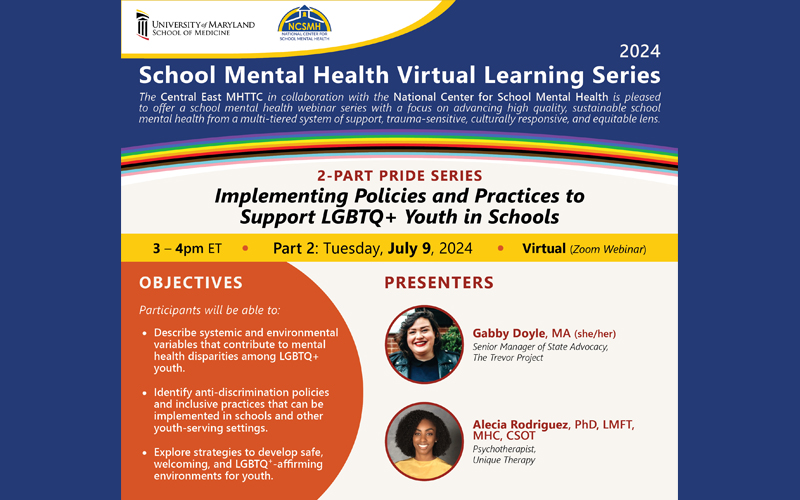
The Central East MHTTC in collaboration with the National Center for School Mental Health (NCSMH) offers a school mental health webinar series with a focus on advancing high quality, sustainable school mental health from a multi-tiered system of support, trauma-sensitive, culturally responsive, and equitable lens.
The 2024 National Strategy for Suicide Prevention is a bold new 10-year, comprehensive, whole-of-society approach to suicide prevention that provides concrete recommendations for addressing gaps in the suicide prevention field.
Schools are prioritizing students’ mental health, and there are many tools and resources to choose from. CDC created this action guide as a place to start. It can help school and district leaders build on what they are already doing to promote students’ mental health and find new strategies to fill in gaps.
These 2024 editions contain major updates and an and easy-to-follow format complete with action steps, best practices, examples from the field, and more.
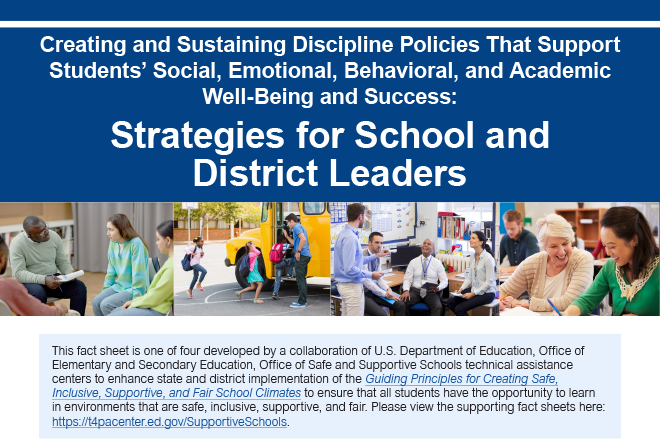
In March of 2023, the U.S. Department of Education released Guiding Principles for Creating Safe, Inclusive, Supportive, and Fair School Climates for students and school staff, featuring specific recommendations for evidence-based practices that allow students to learn, grow, and be successful.
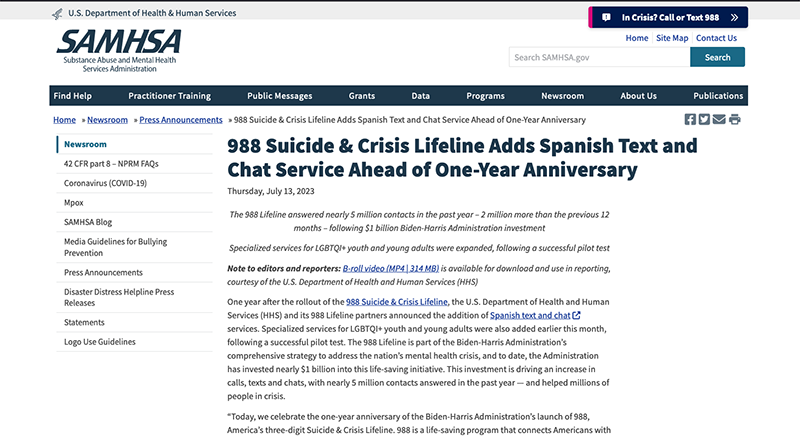
Providing Spanish language support for the 988 Suicide & Crisis Lifeline is an important step. At SRI we’re committed to promoting suicide prevention in our schools and communities.

Grab some ice cream with SRI Education researcher Claire Christensen and her bestie Alexandra Chapman as they talk about a new SRI Education study: Can #texting improve your parenting?